
In 2006, the video game industry was in an exciting moment. A new generation of consoles had been released the year prior; consoles that had the technical capabilities to present, movie like graphics. And to the two major console manufacturers, Sony and Microsoft, this meant that they had to make the most realistic looking, cinematic, mind-blowing games possible. Nintendo was off in the corner playing with its Wiimote.
This is not the only factor that led to there being a big spike in cinematic games during this era though. The video game industry has always been intertwined with the tech industry, game developers are always pushing to make the next best-looking, more-impressive game. Having a game that can claim to have the “best graphics of all time” or “the most particle effects ever” is an easy marketing tool. But over time, as game console generations drag on, the developers are anchored to the hardware that they have to develop for. This makes it very exciting for game makers when a new console is released.
So, the first-party development teams at Playstation and Xbox are trying to prove that their console can produce the best graphics, and you have third-party developers wanting to make the best looking games as well. You can see how this is turning into a dogpile of game companies all trying to make the most technically impressive game of all time, but how does that mean that the games have to be “cinematic”?

(Games like Dragon’s Lair were early examples of cinematic storytelling being used in the medium)
Well to be honest, I really feel that this happened for the sake of palatability. Video games have been trying to tell stories since the early 80’s, and have always wanted to be as easily understandable as their older sister, film. It doesn’t take much thought to watch a movie, it is a very passive medium. So if video games could capture some of this magic, it would allow them to be much more marketable, people would be able to watch a game and have just as good of a time as if they were playing it. Opening up the market to more than just the hardcore. Now that technology had finally caught up with the video games, this was finally feasible.
And there were so many games in this generation that did pull this off, it became the standard rubric of big-budget video games of the era. Uncharted, The Last of Us, Gears of War, Heavy Rain, etc., etc. The infrastructure of online video games had not become as established at the time, game developers primarily made their money from selling games.
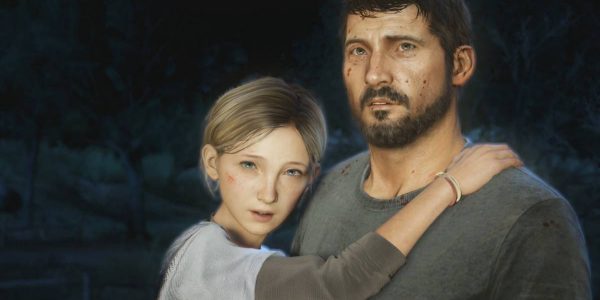
(Naughty Dog’s The Last of Us)
This is why I think that this style of game has diminished. Because of the high-speeds of modern internet and the prevalence of competitive online gaming, big-budget game developers have now shifted their focus onto making “games-as-a-service” style products. They no longer want to make a game that only sells millions of copies, they want to make a game that the consumer will continue to play for hundreds of hours, and will continue to spend money on.
I guess that there is not anything particularly wrong about this, it is just not the type of games that I prefer to play. I don’t want to play a competition, I want to play through a piece of art. A handcrafted story, told to me through a world that I can waltz around in.
Business is cyclical though, and maybe in another decade the tides will shift back.
 Rs Gameboy