The Legend of Zelda is known as one of the most imaginative, polished, and engrossing game series of all time. Nearly every entry is universally beloved by all. But it has never been a series known for having particularly emotional narratives; actually, they typically don’t have much of a narrative at all.
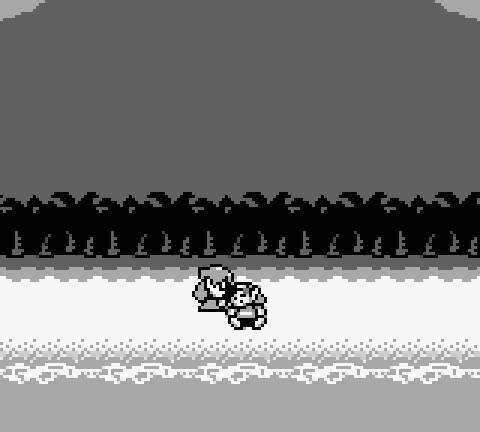
Link’s Awakening was the fourth entry of the series and the first Zelda title to be designed for Nintendo’s Gameboy. Because the Gameboy was a portable system, and taken less seriously as Nintendo’s mainline home consoles, the designers of the game were given much more creative freedom to create a Zelda title with a much weirder world.
The result was a one of the funniest Zelda titles, with moments like a shopkeeper beating you up for robbing his store to Super Mario references and meta-textual jokes. But the humor and surreal elements to the game are not the only side to the coin, in fact the game gets a bit darker than any other Zelda ever has. Which hit me especially hard when I finally made it to the end of the game.
I was born in 1993, the same year that this game was released, to a great pair of dorks. My father had been obsessed with the early days of home computer gaming, playing dos games and writing simple programs in BASIC. So naturally when the Gameboy was released in ’89 he was overjoyed, finally a way for him to play video games while out on military tour. Being an RPG fan, when he heard of a Zelda game coming to the system he snatched it up pretty quick.
So, Link’s Awakening was always around while I grew up. I would watch my dad from over his shoulder without knowing what was really going on, on the screen. As I got to be a bit older I eventually learned how to move the little Link sprite around myself. And over time I made my own save file, attempting to attain all eight instruments, wake the wind fish and win the game. How long to beat.com says that Link’s Awakening takes about 15 hours to beat, it took me about 18 years.
If you have never played a Zelda game, they are a blend of puzzles and action, typically meaning that in order to progress onto the next dungeon you have to solve a very obscure sort of environmental puzzle. Something that as a kid I did not necessarily have the patience for. So over the course of my adolescence I would boot up my save every few months and maybe solve another small puzzle or do a little bit. Celebrating the times where I actually finished one of the eight dungeons.
It wasn’t until the end of my senior year of high school that I beat the game. It was Taks test week, which meant that I would be forced to sit in a class for hours after finishing my test. Naturally for me I used this time to play a few games, I had beaten another game so I popped in the old Link’s Awakening cart. Continuing on from a bit after the halfway point, I found my way to a cave where I had to retrieve a key for the next dungeon. On the wall of the cave was something bizarre, it was a mural, sort of a cave painting. And it read this: “To the finder… the isle of Koholint, is but an illusion… human, monster, sea, sky… a scene on the lid of a sleeper’s eye… Awake the dreamer, and Koholint will vanish much like a bubble on a needle… cast-away, you should know the truth!”
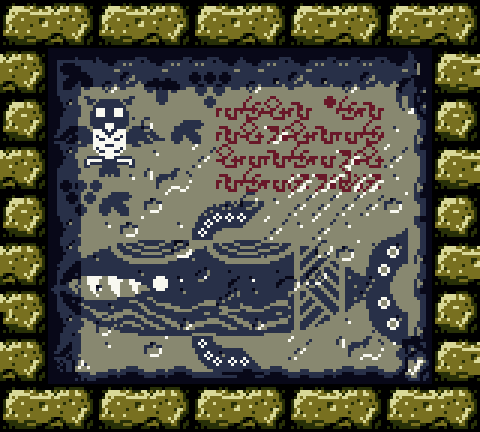
This took me in a weird way, it insinuates that everything in the game was fake,. (Which I guess it is haha) and that they would go away if I wake the wind fish, finishing the game. Getting closer to the end of the game, it starts making this clearer and clearer. When you wake the wind fish this world of Koholint island will disappear, none of it ever will have existed. All the funny characters that I had grown up with, I would cause them all to be gone from their cute, wacky lives.
This was still a quest that I had been wanting to beat my whole life, so I kept on and on the last day of the Taks testing I finished the last dungeon. Meeting the wind fish, in all its glory.
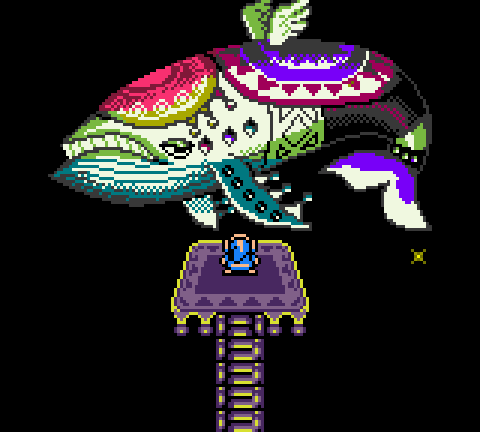
As cheesy as this sounds, I had been waiting on this moment my whole life. My dad had lost interest in the game after his main save file was corrupted when he got to the seventh dungeon. And my brother had only ever made it to the sixth dungeon, none of us had ever made it to see the windfish.
The windfish has a small speech that he gives you, he thanks you for waking him from his dream. Ending with,
“Verily, it be the nature of dreams to end! When I dost awaken, Koholint will be gone… Only the memory of the dream will exist in the waking world… Someday thou will recall this island… That memory must be the real dream world. ..
Come, let us awaken, Together.”
I then watched, with water swelling into my eyes as the game shows all of the characters of the game fading away. The hardest of which for me was Marin, the sort of love interest who has a few heart to heart moments with Link throughout the game.
The camera zooms out to show the entire island as it all fades away, and at this point I had tears rolling down my face. Other classmates were giving me bizarre glances as I was hunching over my Gameboy, crying. I couldn’t quell my emotions though, this world of Koholint and it’s inhabitants had been a constant in my life. And now these characters were gone.
There is a Japanese idea, called mono no aware, and it means that you should be sensitive to and appreciate life, given that it will eventually pass. Kind of a positive version of existentialism, and I think that this game taught me this sort of peace.
My Koholint friends might be gone, as is every dreamworld that we awaken from, but I can still fondly remember my time with them.
Or just replay the game.





 He was one of the first games journalists to start emphasizing the importance of video game preservation and I have so much respect for him and his work. Early film history has many gaps, and there are so many lost works of ancient literature, the hope of Parish and others like him is to keep this from happening to video games.

 Rs Gameboy